Some newer marine VHF radios have a button marked Distress protected by a spring-loaded cover. This shows that the radio is equipped with digital selective calling (DSC), which automates many kinds of radio traffic. DSC radios can send and receive distress calls, securité and all-ships calls, and many routine calls using only buttons and without a microphone, providing vessel ID and perhaps also its location all automatically. They can receive incoming calls much as a telephone does. This reduces the need to monitor channel 16.
When making a DSC call, the radio sends digital data at high speed on channel 70, a channel that never carries voice. Besides identifying the calling and called stations, this data can include location (if the radio attaches to a GPS receiver) and the number of a voice channel that the radio can switch to automatically. Most DSC radios can store vessel names and numbers, much like a cell phone, and keep call logs. Some might have scramblers.
Classes
of DSC
The four kinds of DSC radios are class A, class B, class D, and SC-101. Class A and B are for commercial ships only. Class D radios cost $500 or more and have two receivers, one of which always monitors channel 70. Generally class D radios also have a keypad for entering data and a means of connecting a GPS unit. The least expensive SC-101 radios cost $200 or less and might lack these features. MMSI
number
A DSC radio is identified by its maritime mobile service identity (MMSI) number, which has 9 digits. The first three digits are the country code, either 303, 338, or 366 to 369 for the US or 316 for Canada. The last six digits identify the station. USCG numbers begin with 00, followed by the country code and four more digits. A fleet number is shared by all boats in a fleet, and calls to that number are received by all in the fleet. It begins with a single 0 followed by the country code and five more digits. Each boat in the fleet must also have its own unique MMSI. You can apply for a free MMSI number on the Internet from BoatUS, which provides an online tutorial, or from SeaTow.Mayday calls are announcements on Channel 16 that a vessel is in distress and needs immediate assistance.
Securité (A French word pronounced “say cure ee tay”) calls are announcements on Channel 16, typically to notify other vessels of a potential hazard, such as an oncoming tug with a tow.
Pan Pan (also French and pronounced “pahn pahn”) calls are announcements on channel 16, typically to notify other vessels of a person or ship in danger, such as a man overboard.
Whether listening to a routine weather forecast or an emergency Mayday, often there will be more detail than you can remember. Instead of trying to make notes, use an inexpensive solid state voice recorder to capture the broadcast so that you can replay it later.
Hailing
channels
Channel 16 is the traditional hailing channel and the primary channel used by the USCG for urgent marine information broadcasts and storm warnings except in the First Coast Guard District (waters off the coast of northern New Jersey, New York, and New England) and the Ninth Coast Guard District (Great Lakes) where they instead use only channel 9, reserving 16 for emergencies. To reduce traffic on 16, more and more hailing is being done on channel 9. Many recreational boaters use only channel 9 for hailing and many boats monitor both channels. Commercial vessels such as tugs use mainly channel 13, the bridge-to-bridge channel. After hailing, most sailors will switch to a high numbered channel whereas power boats are more likely to go “up 1” or “up 2,” which practice recommends the use of higher channels. On a passage through strange waters, listening to various channels for a while should quickly clarify the local usage.VHF radio
protocol
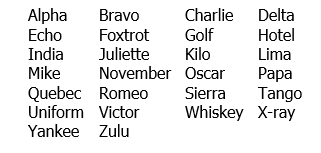
Keep radio traffic to a minimum, particularly on channels 9 and 16. Always change to a working channel at the first opportunity. Switch to low power when it might suffice, as when approaching a dock or bridge. Do not ask for a radio check on 9 or 16. If you do ask for a radio check on a working channel, ask how they hear you, not how they read you. Never say “over and out.” Say “over” if you expect a reply, otherwise just say “out.” Avoid CB radio jargon. Never say the word “Mayday” unless you have a serious emergency and need immediate help; it’s not just foolish, it’s illegal. Memorize and use the official phonetic alphabet: